
A coil running at 80 kHz does not fail all at once. It usually starts with a slow temperature rise, then insulation darkens, then the winding shorts. By the time the equipment trips, the damage is already done.
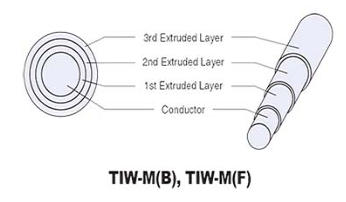
ETFE extruded litz wire is aimed at that failure mode. The conductor uses multiple twisted strands, and the insulation is extruded ETFE rather than enamel or a standard litz jacket. Two effects matter here: skin effect and proximity effect. Skin effect gets most of the attention, but in a packed slot, proximity effect between strands often causes more loss. Twisting helps. So does keeping the strand insulation thin and uniform.
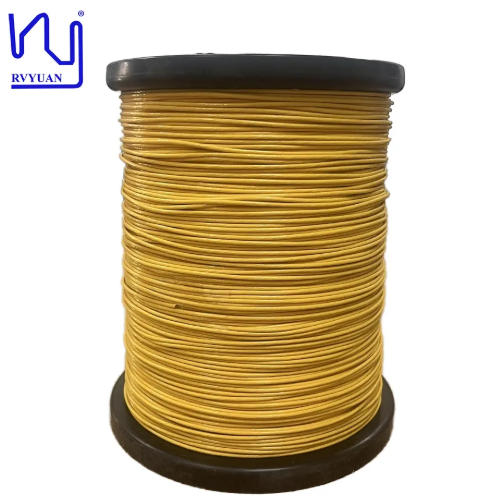
The ETFE layer handles the rest. It tolerates continuous high temperature better than many common insulation materials, and it does not absorb moisture easily. Chemicals and industrial contamination are less of a problem too. That matters for induction heating coils, high-frequency transformers, new energy power modules, and similar equipment where the coil is expected to last for years, not months.
One more thing that gets overlooked: flexibility. A stranded conductor bends more easily than a solid wire of the same cross-section. Winding becomes easier, especially when the coil is small and the turns are tight. That usually shows up as better consistency on the production line and fewer rejects.
So where does this wire make sense? If your operating frequency is above a few tens of kHz, if the ambient temperature is high, or if the coil is difficult to replace, it is worth checking. If the application is low frequency and room temperature, ordinary wire may be enough.
If you want a quick recommendation, send these four things: operating frequency, RMS current, maximum ambient temperature, and the winding window size. With those, we can tell you whether ETFE extruded litz wire is necessary, and if so, what strand count and diameter to start with. Samples are available for your own bench test.
Post time: Sep-27-2026


